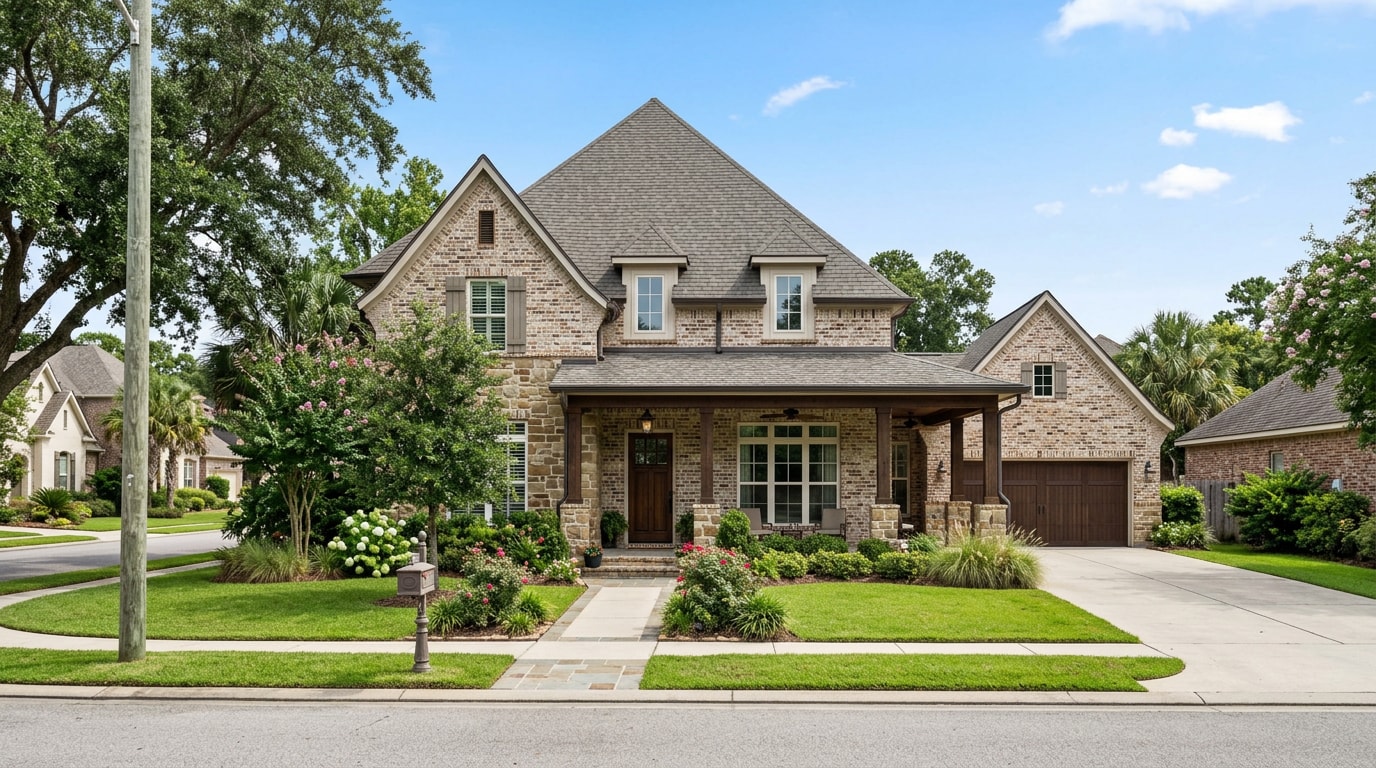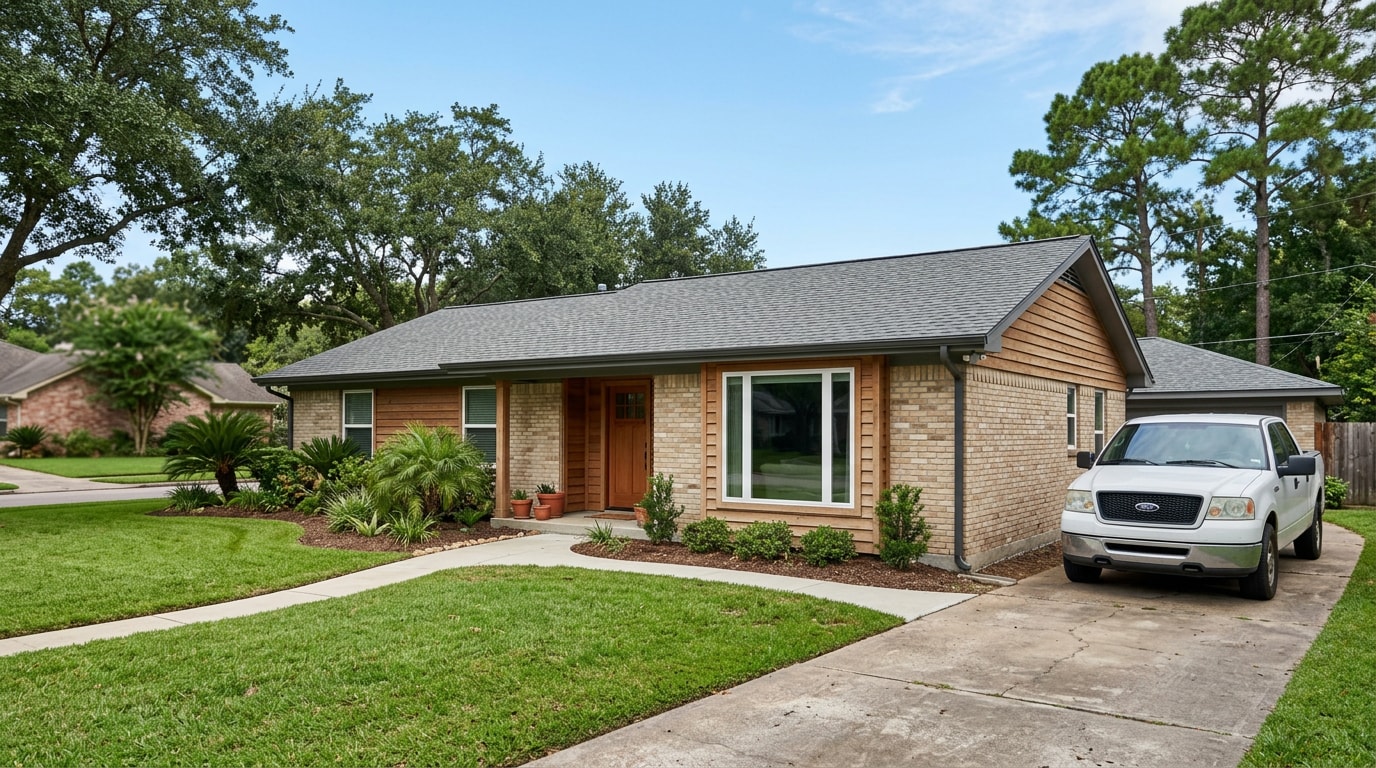
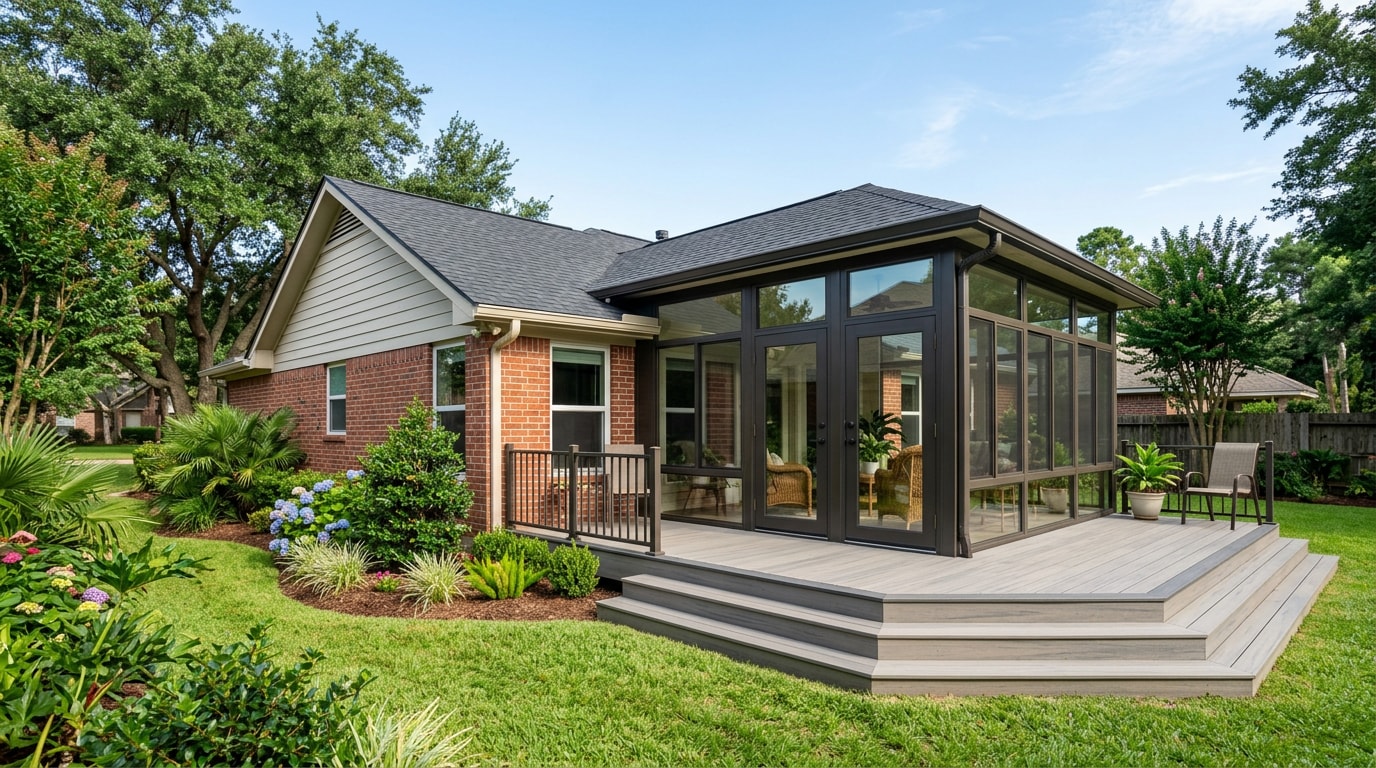
A sunroom extension in Mont Belvieu, TX turns an underused backyard into bright, usable living space without the cost of a full home addition. Gulf Coast humidity and a long warm season make the build type you choose, screened, three-season, or four-season, the single biggest factor in both comfort and price. Here's what each option actually costs, what local permitting requires, and whether the investment holds up at resale.
If you're weighing a sunroom against other backyard upgrades, our outdoor living services page is a good place to compare options before you commit to a design.
Sunroom Types and What They Typically Cost
Homeowners generally choose between four sunroom categories, each with a different price point and comfort level. The right choice depends on how you plan to use the space, your budget, and how much Gulf Coast heat and humidity you want the room to handle year-round.
| Sunroom Type | Climate Control | Best For |
|---|---|---|
| Screened porch | None | Shade, bugs out, lowest upfront cost |
| Three-season room | Minimal (glass panels, maybe a space heater) | Spring through fall use |
| Four-season room | Full insulation, energy-efficient glass, HVAC | Year-round living space |
| Solarium / conservatory | Varies, glass roof and walls | Maximum natural light, premium finish |
Screened Porch, Three-Season, and Four-Season Room Costs
A screened porch is the least expensive sunroom option, a three-season room adds glass and basic comfort for spring through fall, and a four-season room includes full insulation, energy-efficient glass, and HVAC for year-round use. Each upgrade step raises the price noticeably.
- Screened porches mainly keep bugs out and offer shade. They skip climate control entirely, so they're the budget-friendly entry point.
- Three-season rooms add glass panels or vinyl windows and sometimes a small space heater, making them usable for most of the year but not built for extreme heat or cold.
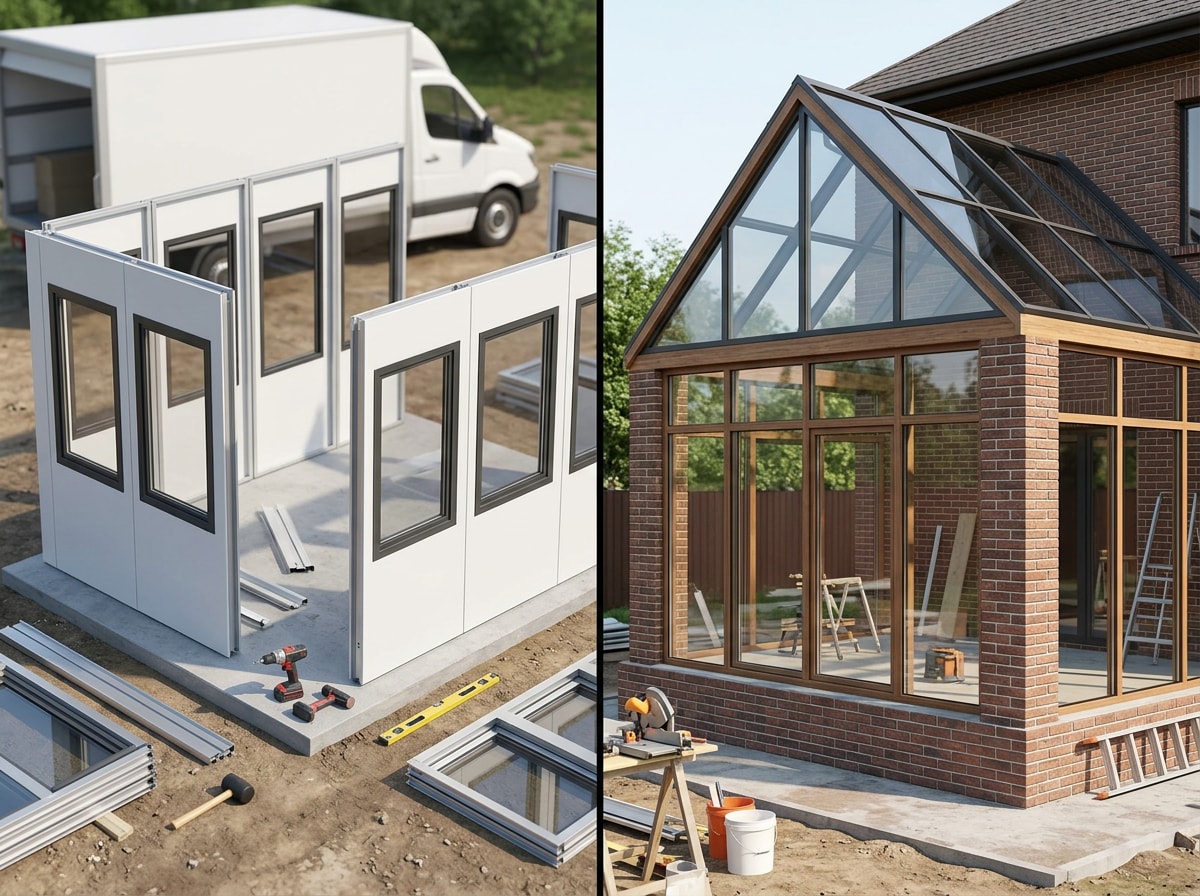
- Solariums and conservatories, with glass roofing and walls, sit at the upper end of this tier and prioritize natural light over efficiency.
- Four-season rooms cost the most because they need enough HVAC capacity to actually dehumidify, not just cool.
Mont Belvieu's humid summers mean a four-season room needs real dehumidification, or you risk condensation and mold around the glass and framing. A three-season room built for a milder climate simply won't hold up the same way here, which is why local HVAC sizing and moisture barriers matter more than they would in a drier region.
Sunroom Cost by Size
Sunroom cost scales closely with square footage, and most projects fall into small (under 150 square feet), medium (150–300 square feet), and large (300+ square feet) categories, with per-square-foot pricing dropping slightly as the room gets bigger.
A small sunroom addition is often used as a reading nook or breakfast space, while medium and large rooms tend to serve as full living or entertaining areas. Exact sunroom dimensions should factor in how the room ties into existing rooflines and whether the foundation needs extending, since irregular shapes or sloped lots can push costs above a straightforward square or rectangular footprint.
What Drives Sunroom Addition Costs Up or Down
Beyond the sunroom type itself, several other factors shape the final number. Materials, foundation work, site conditions, and finish choices can move a quote up or down by thousands of dollars.
Frame Materials and Upgrades
Frame material is one of the biggest variables:
- Vinyl frames are generally the most affordable and low-maintenance option.
- Aluminum frames offer a slim profile and good durability against humidity.
- Wood frames bring a traditional look but need more upkeep in a wet climate.
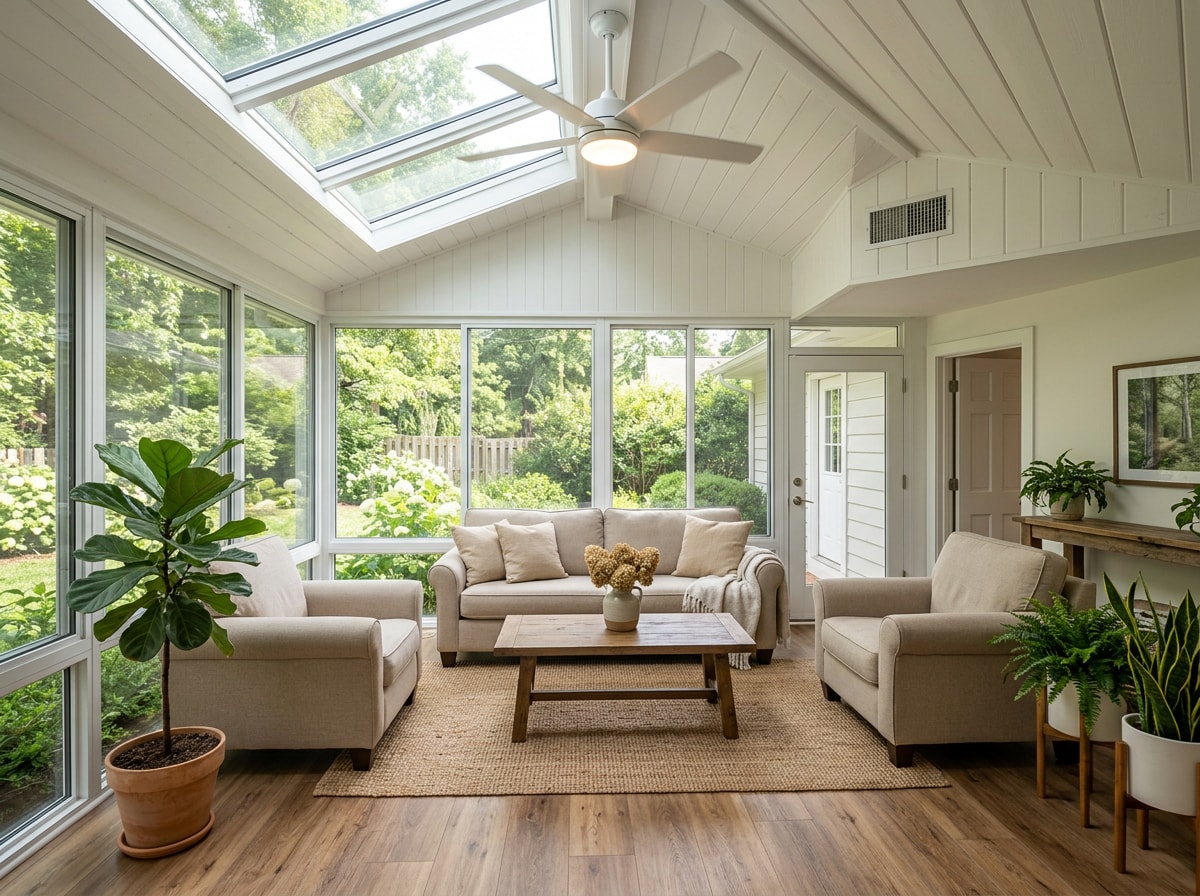
Upgrades like skylights, oversized picture windows, and energy-efficient glass add comfort but also add cost. Energy-efficient glazing is worth considering carefully in Mont Belvieu's climate, since it directly affects cooling loads and condensation control. The ENERGY STAR certification criteria for residential windows is a useful reference point when comparing glazing options across quotes.
Cost Breakdown by Line Item
A typical sunroom budget breaks down across several line items: foundation or slab work, framing, windows and glazing, roofing, HVAC, electrical, flooring, permits, and labor. HVAC and glazing tend to claim the largest share on four-season rooms, while foundation and framing dominate the budget on simpler screened or three-season builds.
Labor cost usually represents a substantial portion of the total, often on par with materials rather than a minor add-on, and it can shift depending on site access and how much demolition or structural tie-in the project requires.
Prefab Kits vs. Custom-Built Sunrooms
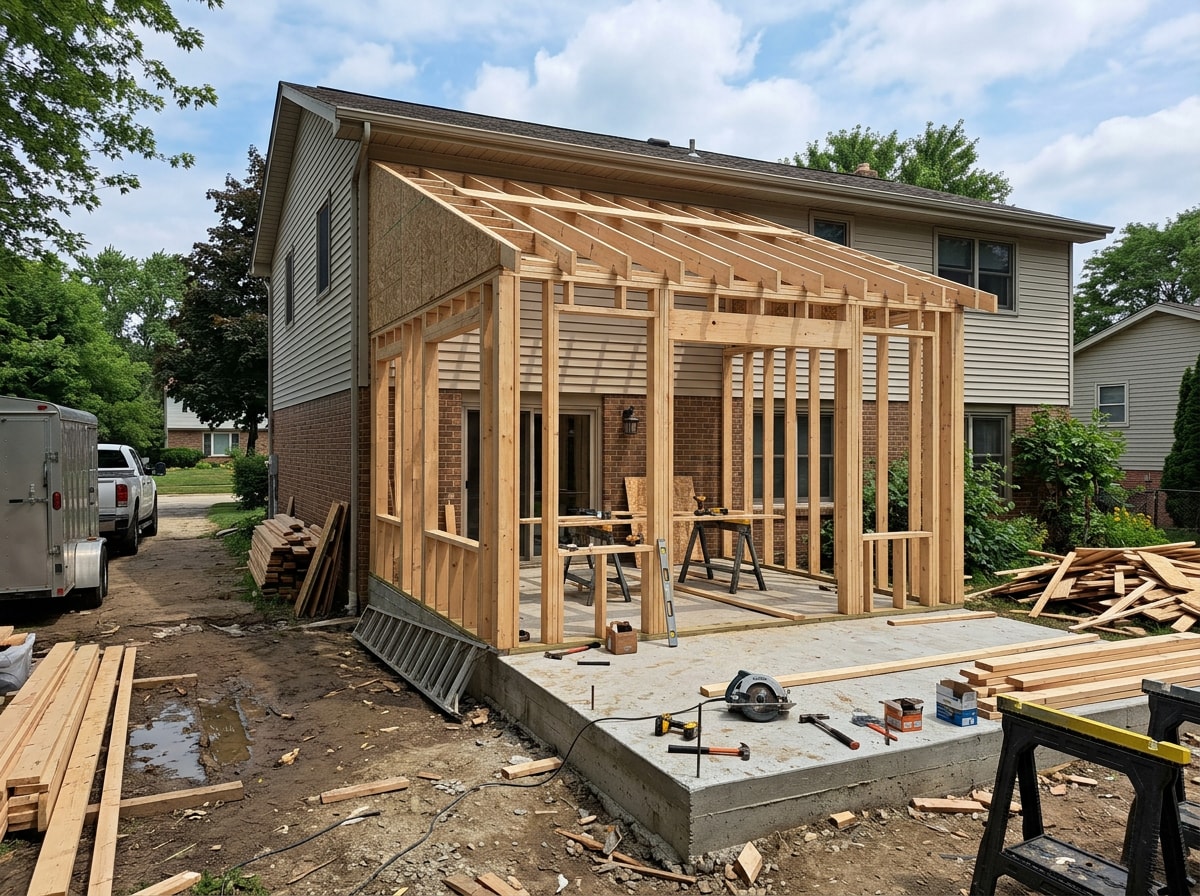
A prefab sunroom kit arrives with pre-cut panels and a fixed design, which usually means a faster installation timeline and a lower starting cost. These kits work well for standard shapes and sizes, and many homeowners appreciate the predictability of a set price.
A custom-built sunroom, by contrast, is designed around your home's specific layout, roofline, and material preferences. It costs more and takes longer to plan and build, but it allows for irregular footprints, matched exterior finishes, and features like vaulted ceilings that prefab kits typically can't offer. Installation timelines for custom builds also tend to stretch longer once permitting and design revisions are factored in.
Sunroom Permits and Building Codes in Mont Belvieu
Nearly every sunroom extension in Mont Belvieu, TX requires a building permit, since it adds conditioned or habitable square footage and ties into structural, electrical, and sometimes plumbing systems. Mont Belvieu sits in Chambers County, and the Chambers County permitting office confirms that county approval is required for any residential addition or remodeling project, with plans reviewed for drainage and building code compliance before a permit is issued.
The building code itself also matters for how your sunroom gets classified. The model residential code used across most of Texas sorts sunrooms into five categories, ranging from unconditioned, screened-in spaces to fully conditioned rooms that are open to the main house, and the category assigned on your permit application affects which structural and glazing requirements apply. A four-season room designed to be heated and cooled falls into a stricter category than a simple screened structure, which is one reason four-season permits take longer to review.
Local building codes typically require inspections at the foundation, framing, and final stages. Permit cost varies by project scope, and it's worth budgeting for review time as well as the fee itself. Homes in planned subdivisions may also need HOA approval before construction starts, which can add several weeks if design guidelines restrict exterior materials or rooflines.
Regional Cost Variation
Labor rates and permit costs aren't uniform across Texas, and Gulf Coast markets carry their own pricing pressures. Wind and flood-zone code requirements common near the coast can add structural reinforcement costs that wouldn't apply in a drier, inland region, so a local cost estimate should always account for area labor rates rather than a generic national average.
In our general contracting work on outdoor living and addition projects along the Gulf Coast, the detail homeowners most often underestimate isn't the glass or the framing, it's HVAC sizing for a four-season room. A unit sized for a drier climate will cool the space but won't pull enough moisture out of the air, which is exactly the kind of mismatch Mont Belvieu's humidity exposes within the first summer.
Does a Sunroom Addition Increase Home Value?
Sunroom ROI depends heavily on type and local buyer expectations. Three-season rooms tend to return a smaller share of their cost at resale since they're seen as a seasonal bonus, while well-built four-season rooms that function as true living space generally hold value better because they add usable square footage.
Return on investment for outdoor remodeling projects is tracked nationally in reports like the National Association of Realtors' Remodeling Impact Report on outdoor features, which gives a general sense of how outdoor projects compare on cost recovery and homeowner satisfaction, though actual resale value always depends on your neighborhood and the quality of the build. If you're comparing a sunroom against other home addition construction projects, it helps to think about which option adds the most functional living space for your household, not just the one with the flashiest finish. Our addition builders guide for Deer Park, TX covers the same cost-versus-value tradeoffs for a broader range of home addition types.
How to Budget for and Reduce Sunroom Addition Costs
Budgeting for a sunroom extension in Mont Belvieu, TX starts with deciding which type you actually need, since jumping straight to a four-season room when a three-season space would suffice is one of the most common overspends. A prefab kit can also trim costs compared to a fully custom design.
A few practical ways to control the budget:
- Build over an existing patio enclosure when the foundation is already sound, which skips a major line item entirely.
- Simplify the roofline instead of matching a complex existing profile.
- Choose standard-size windows over custom shapes and arches.
- Pair the sunroom with broader outdoor living upgrades, like a deck or patio, so you can phase the budget instead of spending it all at once.
Working with a general contractor who handles both the structural work and permitting locally also reduces the back-and-forth that drives up soft costs on a sunroom project. Get a free estimate before you finalize a design so you know where your budget actually lands.
FAQ
Do You Need a Permit for a Sunroom Addition?
In almost every case, yes. A sunroom permit is required in Chambers County because the structure adds square footage and typically ties into your home's electrical or HVAC systems. See the permits section above for how the local review process works.
How Much Does a Small Sunroom Addition Cost?
A small sunroom cost generally falls on the lower end of the size ranges discussed earlier, since less square footage means less framing, glazing, and foundation work. See the sunroom cost by size section above for a fuller breakdown.
What Is the Cheapest Type of Sunroom Addition?
A screened porch conversion is typically the cheapest sunroom option, since it skips insulation, HVAC, and most glazing costs. It's a solid choice if you mainly want shade and bug protection rather than full climate control.
How Long Does a Sunroom Addition Take to Build?
Most sunroom projects take a few weeks to a couple of months from permit approval to completion, depending on size and whether it's a prefab kit or custom build. Permitting and HOA review can add extra time before construction even starts.
Is a Sunroom Addition Worth the Cost?
A sunroom addition tends to be worth it when it adds genuinely usable living space you'll enjoy often, rather than a rarely used add-on. Weigh the ROI expectations from the home value section above against how much your household will actually use the room.
Ready to compare sunroom options for your own backyard? Contact Mellow Vista Home Services for a free estimate, or browse our recent projects to see the kind of work we do across the Houston and Gulf Coast area.